
 The W3C Internationalization (I18n) Activity works with W3C working groups and liaises with other organizations to ensure Web technologies work for everyone, regardless of their language, script, or culture.
From this page you can find articles and other resources about Web internationalization, and information about the groups that make up the Activity.
Read also about opportunities to participate and fund work via the new Sponsorship Program.
What the W3C Internationalization Activity does
Selected quick links
Selected quick links
Selected quick links
Updated Working Draft: Character Model for the World Wide Web 1.0: Normalization
A new version of the Character Model for the World Wide Web 1.0: Normalization was published. The only significant change was a note to clarify that content of the Working Draft is currently out of date, and the Internationalization Core Working Group intends to substantially alter or replace the recommendations found in this document with very different recommendations in the near future.
Just Published! New Version of Working Group Note, Requirements for Japanese Text Layout (日本語組版処理の要件)
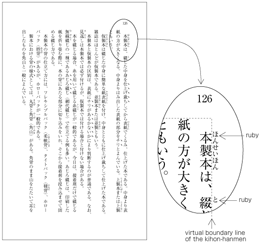
Requirements for Japanese Text Layout describes requirements for Japanese layout realized with technologies like CSS, SVG and XSL-FO. For non-Japanese speakers it provides access to a wealth of detailed and authoritative information about Japanese typesetting. The document is mainly based on a standard for Japanese layout, JIS X 4051 and its authors include key contributors to that standard. However, it also addresses areas which are not covered by JIS X 4051.
This second version of the document contains a significant amount of additional information related to hanmen design, such as handling headings, placement of illustrations and tables, handling of notes and reference marks, etc.
The document was created by the Japanese Layout Task Force (with participation from four W3C Working Groups, CSS, Internationalization Core, SVG and XSL)
A Japanese version is also available.
W3C Workshop, Call for Participation: The Multilingual Web – Linked Open Data and MultilingualWeb-LT Requirements
11 – 13 June 2012, Dublin, Ireland, hosted by Trinity College Dublin.
Organized by the MultilingualWeb-LT Working Group, the purpose of this workshop is two-fold: first, to discuss the intersection between Linked Open Data and Multilingual Technologies (11 June), and second, to discuss Requirements of the W3C MultilingualWeb-LT Working Group (12 – 13 June). For more information, see the Call for Participation.
Participation is free. We welcome participation from both speakers and non-speaking attendees. However, whereas future MultilingualWeb workshops will continue the wide-ranging format of previous MultilingualWeb events, and will aim again at a larger audience, attendees for this workshop are required to participate actively in discussions and will need to submit a position statement for the workshop registration. There are limited spaces available.
The MultilingualWeb Working Group aims to define meta-data for web content (mainly HTML5) and “deep Web” content (for example a CMS or XML files from which HTML pages are generated) that facilitates its interaction with multilingual technologies and localization processes.
New translations into Chinese
Simplified Chinese:
介绍字符集与编码 (Introducing Character Sets and Encodings)
Traditional Chinese:
介紹字符集與編碼 (Introducing Character Sets and Encodings)
These articles were translated thanks to Sun Yuanfu.
Slides and IRC logs for Luxembourg workshop available
The MultilingualWeb Workshop in Luxembourg was another success, thanks once again to the efforts of the excellent speakers and the local organizers. The program included another Open Space discussion organized by TAUS, and a new feature was a number of poster presentations. We had over 130 attendees.
The program page has now been updated to point to speakers’ slides and to the relevant parts of the IRC logs. Links to video recordings will follow shortly.
There are also some links pointing to social media reports, such as blog posts, tweets and photos, related to the workshop. If you have any blog posts, photos, etc. online, please let Richard Ishida know (ishida@w3.org) so that we can link to them from this page.
A summary report of the workshop will follow a little later.
Unicode Consortium CLDR announcements
The Unicode Consortium announced today that the CLDR Survey Tool is open for beta testing. CLDR provides key building blocks for software to support the world’s languages, with the largest and most extensive standard repository of locale data available. The survey tool is an online tool used by organizations and individuals to contribute data to this repository, and to vote on alternative contributions.
The survey tool has undergone substantial revision, with dramatic improvements in performance and usability. The Unicode Consortium would appreciate people trying out the tool so that they can identify any remaining problems before we start data submission (currently scheduled for April 4). More information.
The Unicode CLDR 21.0.1 maintenance release is also now available. See details.
The next major release is CLDR 22, scheduled for late August. The CLDR 22 release does involve general data submission, which will begin soon. See the latest schedule.
W3C Launches Work to Simplify Creation of Content in World’s Languages
Today W3C announced new work to make it easier for people to create Web content in the world’s languages. The lack of standards for exchanging information about translations is estimated to cost the industry as much as 20% more in translation costs, amounting to billions of dollars. In addition, barriers to distributing content in more than one language mean lost business. Multinational companies often need to translate Web content into dozens of languages simultaneously, and public bodies from Europe and India typically must communicate with citizens in many languages. As the Web becomes more diverse linguistically, translation demands will continue to grow.
The MultilingualWeb–LT (Language Technology) Working Group will develop standard ways to support the (automatic and manual) translation and adaptation of Web content to local needs, from its creation to its delivery to end users. Read the press release and learn more about the W3C Internationalization Activity. The MultilingualWeb-LT Working Group receives funding from the European Commission (project name LT-Web) through the Seventh Framework Programme (FP7).
New translation into Swedish
Introduktion till teckenuppsättningar och kodningar (Introducing Character Sets and Encodings)
This article was translated into Swedish thanks to Olle Olsson.
MultilingualWeb registration deadline is close!
Don’t miss the 5th March cut-off for registrations for the MultilingualWeb workshop in Luxembourg (held on 15-16 March).
If you want to attend but haven’t yet registered, please do so as soon as possible in order to get a place. Don’t miss the deadline, because badges have to be prepared for attendees in advance of the workshop to allow access to the European Commission buildings.
You can find a link to the registration form from the Call for Participation at http://multilingualweb.eu/register.
You can see the program at http://multilingualweb.eu/program.
Hope to see you in Luxembourg!
Additional new HTML5 bidi tests
A large number of additional tests related to bidirectional text support in HTML5 have been added to the Internationalization test suite.
These tests look at support for the new auto value of the dir attribute, and there is one more test related to behavior associated with the br element.
The tests are published in the i18n-html5 test suite in the W3C Test Harness as well as being accessible in the usual Internationalization Activity format.
A page summarizing the latest results is available.