
Category: New resource
Posts
New article: Number, currency, and unit formatting
The article Number, currency, and unit formatting has been published.
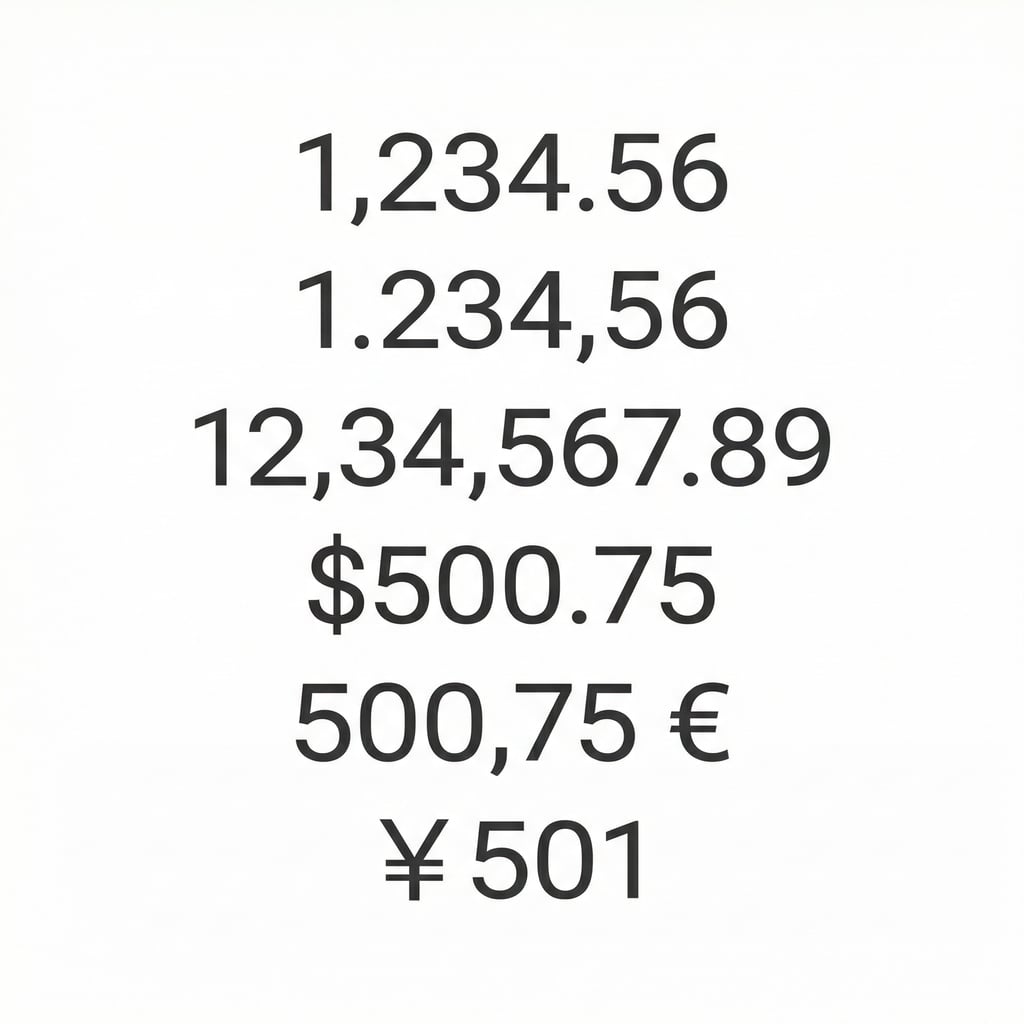
The formats used by numbers, including specialized formatting such as currencies and units, varies dramatically across cultures, regions, and languages. The web platform provides robust, standards-based solutions to navigate this complex landscape. This article will guide you, step-by-step, through leveraging JavaScript’s built-in Intl object to effortlessly adapt your web pages to varying international number, currency, and unit formats.
FOR REVIEW: Styling underlines
The article Styling underlines is out for wide review. We are looking for comments by Thursday 19 March, 2026.
This article explores various ways in which CSS can be used to manage underlines for non-Latin scripts.
Please send any comments as GitHub issues by clicking on this link, or on “Leave a comment” at the bottom of the article. (That will add some useful information to your comment.)
New First Public Draft Note: Text-to-Speech Rendering of Electronic Documents Containing Ruby: User Requirements
The Internationalization Activity published Text-to-Speech Rendering of Electronic Documents Containing Ruby: User Requirements as a First Public Draft Note.
This document describes user requirements related to text-to-speech rendering of electronic documents containing ruby annotations. It examines the roles and practices of ruby in different writing systems and discusses the implications of various reading strategies for text-to-speech, without prescribing algorithms or implementation-specific behavior.
Comments welcome, via the GH links indicated at the top of it.
New articles have been published
Two articles have been published:
Address formats vary widely across the globe, with differences in structure, content, and the level of granularity. For authors and developers designing forms, databases, or systems that handle addresses, understanding these variations is crucial to avoid frustrating users from other countries. The first article will introduce some of the key differences in address formats around the world and provide guidance on how to design systems that can handle them effectively.
The second article will serve as a practical overview of the most essential parts of the Intl API, providing actionable examples you can use to internationalize your web applications today.

New article: How to make list markers stand upright in vertical text
The article How to make list markers stand upright in vertical text has been published.
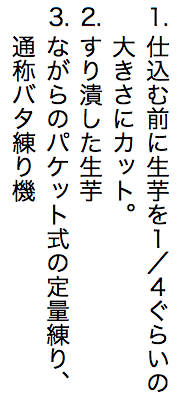
In Chinese, Japanese, Korean, and Mongolian vertically-set text it is normal for list counters to sit upright above the start of the list. Until recently this was problematic, because browsers would only show the numbers lying on their side. This article describes how to make them stand upright, and the currently remaining issues to make this look perfect.
New First Public Working Drafts: Bengali, Canadian Syllabics, Cherokee, Cyrillic, Devanagari, Ethiopic, Georgian, Greek, Gujarati, Japanese, Javanese, Korean, Mongolian, Osage, Tamil, Tibetan
The Internationalization Activity published the following FPWD documents.
- Bengali Script Resources
- Canadian Syllabics Script Resources
- Cherokee Script Resources
- Cyrillic Script Resources
- Devanagari Script Resources
- Ethiopic Script Resources
- Georgian Script Resources
- Greek Script Resources
- Gujarati Script Resources
- Japanese Script Resources
- Javanese Script Resources
- Korean Script Resources
- Mongolian Script Resources
- Osage Script Resources
- Tamil Script Resources
- Tibetan Script Resources
The documents related to language enablement at the W3C continue and expand the work to reorganise information to represent scripts, rather than individual languages. The newly published -lreq documents should be a first port of call for information related to a given script. They point to descriptions about how the scripts work, to tests, to discussions, to type samples, and more, all organised by topic.
Comments welcome, via the GH links indicated at the top of each page.
New First Public Working Drafts: Latin, Arabic, Hebrew, Chinese
The Internationalization Activity has just published the following FPWD documents.
- Latin Script Resources
- Latin Gap Analysis
- Arabic Script Resources
- Hebrew Script Resources
- Chinese Script Resources
The documents related to language enablement at the W3C are being refactored to represent scripts, rather than individual languages. These newly published -lreq documents should be a first port of call for information related to a given script. They point to descriptions about how the scripts work, to tests, to discussions, to type samples, and more, all organised by topic.
Comments welcome, via the GH links indicated at the top of each page.
New article: How can I use direction metadata in native APIs?
The article How can I use direction metadata in native APIs? has now been published.
This article provides links to documentation in many different operating systems, programming environments, and user experience frameworks. These APIs can then be used to consume language and string direction metadata received on the Web or in other APIs or formats.
New First Public Working Drafts: Kashmiri, Urdu, Uighur
The Internationalization Activity has just published the following FPWD documents.
These languages are all written right-to-left (based on the Arabic script) and are used in India, Pakistan, and Western China. Urdu & Kashmiri are normally written in the nastaliq writing style.
Currently, these documents mostly point to external descriptions of how the script works. They also point to relevant GitHub discussions, tests, and gap reports. This provides a convenient way to access information about a particular script/language when doing gap analysis as part of our language enablement program.
Comments welcome, via the GH links indicated at the top of each page.
New First Public Working Draft: Adlam
The Internationalization Activity has just published the following FPWD document.
This document was also updated.
Currently, these documents mostly point to external descriptions of how the script works. They also point to relevant GitHub discussions, tests, and gap reports. This provides a convenient way to access information about a particular script/language when doing gap analysis as part of our language enablement program.
Comments welcome, via the GH links indicated at the top of each page.
W3C® liability, trademark and permissive license rules apply.
Questions or comments? xfq@w3.org