Staff
The W3C Team is composed of 53 people of mixed gender, age and race who come from 14 different regions across the globe. With a truly international flavor, the W3C Team operates primarily remotely and includes engineers and experts who work from more than 10 different countries.
Read more about the W3C's functional internal organization.
See group photos we took over the years.
Would you like to work for W3C? See if we have job postings.
Browse by W3C teams
Alumni
AlumniDenis Ah-Kang
Principal DevOps Engineer
Denis joined W3C in August 2011, as part of the Systems Team, to become the W3C Webmaster at the MIT host site in Cambridge, MA, USA.
Between 2013 and 2014, he joined the Interaction Domain to work on the HTML5 test suite. He is now working on maintaining the W3C infrastructure and is involved in the development of the publications tools.
Prior to joining W3C, Denis worked for various consulting companies as a software developer.
Denis is currently based in Reunion Island.
 denis@w3.org
 Denis's Github account

Catrina Ahlbach
Chief of Staff, Manager of the Office of the CEO
Catrina joined W3C in December 2024. A long time web developer and evangelist, she is now working on a Masters in Library and Information Studies.

Rémi Bétin
Senior Project Manager, Web Accessibility Initiative (WAI)
Rémi joined the W3C team in February 2025 to contribute to Web Accessibility Initiative (WAI) projects. His current work includes managing WAI translations, improving content development processes, and contributing to expanding W3Cx accessibility courses.
Prior to joining the team, Rémi worked on various projects involving project management, web design and development. In 2021, he got involved in translations of WAI resources as a volunteer. Between 2023 and 2024, he worked part-time on managing the WAI translations and improving the WAI website’s resources and processes.

Bert Bos
Principal Communications Tooling & Graphic Designer; Principal, Team Contact
Bert Bos completed his Ph.D. in Groningen, The Netherlands, on a prototyping language for graphical user interfaces. He then went on to develop a browser targeted at humanities scholars, before joining the W3C at INRIA/Sophia-Antipolis in October 1995. He is co-inventor of CSS and created & led W3C's Internationalization activity. After working on HTML and XML, he led for many years the CSS and later also the Mathematics activities. He is now working on privacy technologies and is part of the W3C communications team.

Carine Bournez
Principal, Team Contact
Carine joined the W3C team in 2001 as part of the Jigsaw HTTP server development team.
She holds an engineer degree and a PhD in Computer Science, with a research area in distributed artificial intelligence and multi-agent systems.
She has worked in the Web Services Activity and the XML Activity as staff contact for multiple Working Groups, in several EU-funded projects, in the Systems Team, and in internal tools development.
Currently staff for WebRTC WG, Web Performance WG, SVG WG, Data Shapes WG.

Sylvia Cadena
Chief Development Officer
I joined the World Wide Web Consortium (W3C) as Chief Development Officer in September 2024 to focus on setting direction and expanding development portfolio across internationalization, accessibility, privacy and security for the Web, ensuring the longevity of the organization by defining a vision for financial security.
I am a seasoned international development expert with 30 years’ experience across Latin America and the Asia Pacific. I have extensive experience in fundraising, design, management and reporting at local, national and regional level, leading purposeful collaborations that strategically use the Internet and the Web for social, economical, and cultural development.
Before W3C, I worked at APNIC for 16 years. During my tenure, I worked to establish the Information Society Innovation Fund (ISIF Asia); the Seed Alliance and more recently the APNIC Foundation, where I worked to expand its grant making, allocating close to 11M USD to close to 200 initiatives across 32 economies. I also led the design and implementation of a number of training and professional development initiatives addressing gender diversity and social inclusion in APAC.
Throughout my career I have served the Internet technical community on a variety of roles across a number of advisory bodies and selection committees related to Internet Governance, innovation, women in technology and professional development initiatives with a focus on the Internet industry, at a global and regional level. I have addressed many national, regional and international conferences.
Read more in my LinkedIn profile.

Laurent Carcone
Senior Systems Engineer
Laurent joined the W3C team in September 2000 to participate in the development of Amaya.
He is now part of the Sytems Team.
Before joining the W3C, he worked as an engineer at INRIA Grenoble.
Laurent hold an engineering degree in computer science from the CNAM Grenoble (Conservatoire National des Arts et Métiers) in 1997.

Pierre-Antoine Champin
Principal Data Strategist
Pierre-Antoine joined W3C in February 2021, as a fellow from ERCIM, then from Inria. He is a member of the Technical Strategy Team, with a focus on Data Interoperability. Before that, he has been involved in many Linked Data and Semantic Web related working groups (including RDF 1.1, Linked Data Platform and JSON-LD). He has been working with RDF and other Semantic Web technologies for as long as he can remember.
Pierre-Antoine received an engineering degree from INSA Lyon in 1997 and a PhD in Computer Science from Université Claude Bernard Lyon 1 in 2002. He is currently based in Lyon, France.

François Daoust
Director, Project & Process; Senior Principal Media & Gaming Specialist
Starting in August 2025, François is responsible for project management, process execution, and chairs relationships and development.
François also takes part in on-going discussions and developments on media and entertainment on the web. This includes media capture, processing, streaming and playback, as well as gaming scenarios. He is currently staff contact for the Media Working Group, Second Screen Working Group, GPU for the Web Working Group, and Browser Testing and Tools Working Group.
On other fronts, François maintains Webref, a database of specifications with machine-readable references of CSS properties, definitions, IDL, and terms extracted from web specifications. He also co-chairs the Web Developer Experience (WebDX) Community Group.
François initially joined W3C in November 2007 from Microsoft where he integrated an on-portal mobile search engine called MotionBridge. From 2007 to 2011, he served as staff contact for the Mobile Web Best Practices Working Group, the Web and TV Interest Group, the Web Real-Time Communications Working Group and was co-Activity Lead for the Web and TV Activity. He left W3C at the end of 2011 to develop cross-platform Web applications in a French start-up called Joshfire. François came back to W3C on May 2014.

Seth Dobbs
Chief Executive Officer
Seth is W3C President & Chief Executive Officer (CEO) since November 2023.
Seth reports to the W3C Board of Directors and takes responsibility for the fiscal integrity, financial stability and revenue generation of the World Wide Web Consortium (W3C). He leads the change management and integration efforts for W3C to create new offerings, seek broader financial support opportunities, and succeed as a public-interest not-for-profit with global partners. He oversees shaping and running W3C in line with its mission to lead the Web to its full potential.

Tamsin Ewing
Senior Accessibility Content Specialist
Tamsin joined the W3C Web Accessibility Initiative (WAI) team in July 2024. Her work at W3C includes designing and writing content for accessibility resources, developing accessibility course content, supporting accessibility communications, and contributing to collaborative editing of WAI Working Group materials.
Tamsin's work is strongly informed by user experience (UX) design principles, design thinking methodology, and best practices in digital accessibility.
Tamsin has a Digital Accessibility micro-credential from Victoria University of Wellington, a graduate diploma from Auckland University of Technology in Communications Studies, and an Honours degree from the University of Salford in Modern Languages (French, Spanish and Portuguese), specialising in translation and interpreting. Tamsin is a Certified Professional in Accessibility Core Competencies (CPACC).
Prior to joining W3C, Tamsin worked as a content designer and digital accessibility specialist in the New Zealand public sector. Tamsin is based in Hawke's Bay, New Zealand.

Marie-Claire Forgue
Director, Training
Marie-Claire Forgue serves as Director of Training. She developed the W3Cx MOOC program, in partnership with edX, where Web developers worldwide can learn front-end Web development techniques using W3C Web standards. Previously, she crafted W3DevCampus, a learning platform hosting small private courses. Additionally, Marie-Claire is a member of the W3C Developer relations team, organizing meetups and participating in online and in-person communities via forums, social media (@w3cdevs), etc.
She is also involved in the dissemination activities of several projects funded by the European Commission. She joined W3C in 2001 and served as Head of W3C European Communications for over 10 years.
Marie-Claire received a Ph.D. degree (computer graphics and parallel processing) in Computer Science from the University of Côte d'Azur and INRIA, France. After a year as a postdoctoral fellow at the Dynamic Graphics Project Lab at the University of Toronto, Canada, she worked at NTT's Human Interface Lab, Japan, for two years. Her research interests were focused on illumination algorithms and scene modeling. After that, she studied filmmaking in Vancouver, Canada. She has directed several short films and documentaries, and got interested in interactive multimedia back in 1993.

Ken Franqueiro
Senior Software Engineer
Ken joined W3C in May 2024 to improve the architecture of surfaces related to the Web Accessibility Initiative (WAI). He rewrote and now maintains the build system for the Web Content Accessibility Guidelines' (WCAG's) Techniques and Understanding documents, and is also responsible for the architecture for building the WCAG 3 documents. He is the W3C staff contact for the WCAG 2.x Backlog Task Force, and regularly assists with maintenance of the WCAG 2 repository. Ken supports W3C work through Massachusetts Institute of Technology (MIT).
Ken has been working with Web technologies for over 15 years, including as a committer/maintainer to multiple open-source front-end libraries, and is excited to focus full-time on static site generation.

Emma Fraser
Administrative Associate & Board Enablement Specialist
Emma joined W3C in July 2024, fresh out Wellesley College '24, to assist as recording secretary for the Advisory Board and Board of Directors.
She graduated Magna Cum Laude with degrees in Psychology and East Asian Languages and Cultures with a focus in Chinese. She also published research in Psychology investigating the correlation between the sexualization of female characters in video games and hostile sexism, comparing genres with sexist/feminist attitudes.

Christine Gefaell
Director, Legal & Compliance
Christine joined the W3C Team in October 2024 as Director of Legal and Compliance to ensure W3C operates in full compliance with all applicable laws and regulations throughout the world, to advise on all legal matters, to guide the organization's policies, ultimately furthering our mission and goals.
Prior to joining W3C, Christine worked as an associate general counsel in the ethics and compliance department at a global, biotech company focusing on areas such as antitrust, trade compliance, anti-bribery/anti-corruption, human rights, and risk management, generally. Previous to this corporate position, she worked in litigation as a defense, professional malpractice attorney. Christine is licensed in both New Jersey and Connecticut.
See her LinkedIn profile for more information.

Dominique Hazaël-Massieux
VP, Global Impact; VP, W3C EMEA; Distinguished Expert, VR/AR & AI
Dominique is VP of Global Impact, VP of EMEA operations, Distinguished Expert on AR/VR and AI. He manages W3C Developer Relations, serves as W3C Community Development Lead (in charge of managing the Community Groups program), and serves as staff contact in the Web Real-Time Communications Working Group, the Web and Machine Learning Web Working Group, and the Web & Networks Interest Group. He is the General Manager of ERCIM, the W3C Partner in Europe. He also develops tools and applications as needed in his various roles.
He joined initially W3C’s Communication and Systems Team as a member of the Webmaster Team in October 2000; after having joined then led the QA Activity until September 2005, Dom took part in the Mobile Web Initiative as Staff Contact for the Best Practices Working Group and later as co-Chair of the Mobile Web Test Suites Working Group. Dom also served as Staff Contact for the Device and sensors Working Group
Dominique holds an engineering degree from the “Grande Ecole” École Centrale Paris.

Shawn Lawton Henry
Director, Web Accessibility Initiative (WAI)
Shawn is Director of the W3C Web Accessibility Initiative (WAI) that develops strategies, standards, and resources to make digital content and technology accessible to people with disabilities. She joined W3C in 2003 to lead worldwide accessibility education and to bring user experience design to WAI resources. Shawn was an Invited Expert, Staff Contact, and Chair of the W3C Accessibility Education and Outreach Working Group from 2002 to 2024.
Shawn focuses her personal passion for accessibility on bringing together the needs of individuals and the goals of organizations in designing human-computer interfaces. Before joining W3C, she developed and implemented strategies to optimize user interface design for usability and accessibility as a consultant to Fortune 500 companies, education providers, government agencies, non-profits/NGOs, international standards bodies, and research centers.
Shawn holds a Bachelor of Science in English with focus on technical writing and computer science, and a Master of Science with Distinction in Digital Inclusion.

Ivan Herman
Principal Publishing Specialist
Ivan Herman graduated at the Eötvös Loránd University of Budapest, Hungary, in 1979. After a brief scholarship at the Université Paris VI he joined the Hungarian research institute in computer science (SZTAKI) where he worked for 6 years. He left Hungary in 1986 and, after a few years in industry in Munich, Germany, he joined the Centre for Mathematics & Computer Sciences (CWI) in Amsterdam where he had a tenure position between 1988 and the year of his retirement, i.e., in 2021. He received a PhD degree in Computer Science in 1989 at the University of Leiden, in the Netherlands.
He joined the W3C Permanent Staff in January 2001 while maintaining his position at CWI, and has remained as an emeritus, part-time W3C staff member since his retirement from CWI. As a W3C staff member, he served as Head of Offices until June 2006, then as Semantic Web Activity Lead until December 2013. He is currently the Publishing@W3C Technical Lead, as well as the W3C staff representative for the work on Publishing Maintenance and on Verifiable Credentials. He was also member of the Strategy, as well as the Technical & Architecture teams of W3C until 2021.
Before joining W3C he worked in different areas (distributed and dataflow programming, language design, system programming), but he spent most of his research years in computer graphics and information visualization. He also participated in various graphics-related ISO standardization activities and software developments. See his professional web site for further details, including his list of publications, presentations, and various social activities.

Philipp Hoschka
Dr. Philipp Hoschka is General Manager of ERCIM and a Deputy Director of the W3C. He was founding W3C Industry Lead. He was responsible for W3C industry relationships; including having mutually reinforcing visions; working well in their ecosystems, and identifying new industry requirements for W3C Working Groups. His current work focuses on the "Web of Things", which is about leveraging open Web technology to overcome current silos in the "Internet of Things". In 2012, Philipp launched W3C efforts on automotive, focusing on the use of HTML5 for in-car infotainment apps. He also founded W3C's Ubiquitous Web Domain which had the mission to bring the benefits of Web technology to the emerging "Post-PC" world, including mobile and television devices. In the past, Philipp created W3C's Mobile Web Initiative and pioneered work on integrating audio and video into the Web leading to the W3C Standard SMIL. Philipp has been principal investigator in six EC research projects supporting the Ubiquitous Web Vision (MWeb, 3GWeb, MobiWeb2.0, OMWeb, MobiWebApp, HTML5Apps). Philipp holds a Ph.D. degree in Computer Science, and a Master's Degree in Computer Science from the University of Karlsruhe, Germany. He was visiting scholar at MIT LCS from 1998 until 2002.

Chunming Hu
Board of Directors
Chunming Hu had worked for the W3C China office since 2006 and then he joint W3C team in Jan 2013 as the Deputy Director of W3C/Beihang. He has a PhD degree on computer science and currently works as an full professor at Beihang University. Now he is the Dean of School of Software, Beihang University and his main research interests includes large scale distributed systems, software middleware, system virtualization and resource scheduling in cloud/big data systems.

Marc Infield
Director, North America Development
I joined the World Wide Web Consortium (W3C) as Director, North America Development in 2025 to expand partnerships and advance initiatives that ensure the Web remains accessible, inclusive, and secure.
I bring over 25 years of experience in digital strategy and customer experience, having worked with global organizations such as Tesla, Dropbox, Twitter, and Gap Inc. to deliver transformative solutions. I served as Executive Vice President of Technology at Bounteous, where I led the development of innovation practices in Composable Architecture and Customer Data Platforms, and earlier founded Infield Digital, a digital agency acquired in 2018.
I also serve on the board of Encoord a renewable energy transition company and support mission-driven organizations that drive innovation and impact.

Richard Ishida
Distinguished Expert, Internationalization
Richard joined the W3C team in July 2002 to work on Web internationalization (i18n), serving as staff contact and technical contributor to the Internationalization Working Group. He was the Internationalization Lead between 2004 and 2024. He created and led the highly popular MultilingualWeb EC project, and received a special award from the Advanced Publishing Lab in Japan for services to the Internationalization of Web Typesetting and Japanese Language Support. After introducing education and outreach activities to the W3C Internationalization work, he went on to develop a framework for investigating and resolving gaps related to the support of languages and writing systems around the world. Semi-retired as of the beginning of 2024, he now focuses on that ‘Language Enablement’ work.
He serves on the Unicode Editorial Committee and the Unicode Script Encoding Working Group. For many years he also served on the Unicode Conference board, and has a Unicode Bulldog Award. He developed the W3C Internationalization Checker, and in his spare time creates tools and articles (such as UniView) to help people working with characters and scripts from around the world.
Richard has a background in translation and interpreting, computational linguistics, software engineering, and translation tools. Prior to joining the W3C, he was a Global Design Consultant at Xerox, providing services and training to external clients as well as to internal development teams with regard to the international design and localizability of user interfaces and documents. He received a corporate award for work on the Xerox product development process.

Ian Jacobs
Director, Payments
As of September 2025, Ian leads the CEO's Structural Evolution Initiative, which focuses on ensuring that W3C's underlying structure, processes, and policies for nurturing ideas from innovation to standardization are fit for purpose and will effectively enable all of our future work.
As of 1 Feb 2015, Ian leads W3C's Web Payments Activity.
Ian led the creation of the Community Groups Program in 2010, and continues to run the program with Dominique Hazaël-Massieux.
Ian and François Daoust organize breakout sessions both during W3C's annual big meeting ("TPAC") and in "Breakouts Days" that take place at other times of the year.
Ian provides staff support for the W3C Board of Directors.
From September 2004 through January 2015, Ian was the Head of W3C Marketing and Communications. He managed the Consortium's Comm activities, including press, publications, branding, marketing, and aspects of Member relations.
Ian began at W3C in 1997 and for 7 years co-edited a number of specifications, including HTML 4.0, CSS2, DOM Level 1, three WAI Guidelines (Web Content, User Agent, Authoring Tool), the TAG's Architecture of the World Wide Web, and the W3C Process Document.
Ian received a degree in Engineering from Yale then a master's degree in software engineering from the CERICS in France. Ian then worked as a software engineer for five years, including at the INRIA.

Xueyuan Jia
Manager, Member Communications; Principal, Team Contact
Xueyuan Jia joined W3C in May 2015. She was the primary meeting planner at W3C/Beihang, and also the Media Contact in China as a member of W3C Marketing and Communications team. Since June 2017, she fully joined Marketing and Communications team to be committed to Member communications, W3C groups and team supports, as well as to expand W3C press relations in China.

José Kahan
Senior Systems Engineer
José joined W3C's technical staff, at INRIA Rhône-Alpes, in January 1996. He participates in the development of Amaya, and in various other projects, including W3C's hypertext mailing list archives. José holds a Ph.D. in computer science from the Université de Rennes I (1997) and a specialization degree in computer networks from the École Supérieure d'Électricité (SUPELEC), Rennes.His research interests include distributed systems and W3 security.
Alexandra Lacourba
Director, Global Events; Director, Financial Operations
Alexandra joined W3C in September 2002.
She oversees all aspects of event planning, including budgeting, scheduling, and coordinating with internal teams and external vendors. She also leads Membership Administration including AC representative liaison, billing, reporting and other administration. She is also in charge of other financial operations such as staff travels.
Alexandra holds a bachelor in Event Project Management from Lille University and a Master in Management from EDHEC Business School.

Vivien Lacourba
Director, Systems
Vivien joined W3C in May 2003 as the W3C Webmaster at the MIT/CSAIL host site in Cambridge, MA, USA.
Since September 2004 Vivien is working as a Systems & Network Engineer for W3C Europe at the ERCIM host site in Sophia-Antipolis, France.
Vivien graduated in September 2003 from the Polytech Nice Sophia engineering school (formerly known as ESSI) in Sophia-Antipolis, France.
He holds an engineering degree in Computer Science, specializing in Networks. In June 2000, he received a two year degree in Computer Programming at the University of Lyon, France.

Yves Lafon
Senior Principal Core Architecture Specialist
Yves Lafon studied Mathematics and computer science at ENSEEIHT in Toulouse, France, and at Ecole Polytechnique de Montreal in Montreal, Canada. His field of study was signal recognition and processing. He discovered Internet Relay Chat and the Web in Montreal in 1993 and has been making robots and games for both. He joined the W3C in October 1995 to work on W3C's experimental browser, Arena. Then he worked on Jigsaw, W3C's Java-based server, on HTTP/1.1 and started the work on SOAP 1.2.
Yves is now the TAG Team Contact and Web Transport Team Contact.
Philippe Le Hegaret
VP, Technical Strategy
Philippe Le Hegaret is VP, Technical Strategy, responsible for the technical mission of the Consortium. Until 2025, he was also the Project Lead, responsible to drive the work necessary to achieve technical operational success. He is the current co-Chair of the W3C Process Community Group. Until 2016, he was for the former W3C Interaction Domain, which produced frontend Web technologies including HTML5, CSS3, SVG, WOFF, or Web APIs. In 2015, he helped launch the Web Platform Incubator Community Group, a lightweight venue for proposing and discussing new web platform features. In 2009, he proposed a testing project, which later grew into the web-platform-tests project. Prior to 2009, Philippe lead the W3C Architecture Domain, which produced the W3C Core technologies in the area of XML, Web Services, and Internationalization. He is a former Chair of the Document Object Model (DOM) Working Group.
Prior to joining W3C, Philippe promoted the use of XML inside Bull in 1998, also focusing on the interaction between XML and object structures. He wrote the first version of the CSS validator in 1997.
Philippe holds a Master's Degree in Computer Science from the University of Nice (France).

An Qi (Angel) Li
Director, Chapters; Director, W3C China
Angel Li joined W3C in 2006. Since 2010, she had been devoted to setting up the fourth Host of W3C in China together with W3C Team and Beihang University. In January 2013, as the Host of W3C in China was officially launched, Angel Li was assigned as the Manager of W3C China Host, responsible for managing W3C activities in China as well as joining the global W3C management team.
Angel left W3C in June 2018 and started an adventure in the industry with Alibaba, mainly working as the representative of Alibaba in a number of domestic and international standard organizations. Her life in W3C included being the Advisory Representative and the chair of couple of groups.
In Nov 2021, Angel rejoined W3C as the Deputy Director of W3C China. From Jan 2022, she started to work with W3C community as the co-chair of W3C Governance Task Force focusing on the design and implementation of new W3C governance structure. With the Board of Directors officially seated in Oct 2022 and W3C Inc the new legal entity up and running on Jan 2023, the W3C Governance Task Force completed its mission and Angel shifted her focus to W3C Global Chapters and Evangelists Program, Diversity Fund Selection Committee and a few other projects. She was appointed as the co-chair of the W3C Advisory Board in Jan 2025 and has been working with the W3C Advisory Board on topics of interests to the community.

Zhenjie Li
Senior Administrative Specialist
Zhenjie joined W3C in May 2017 as the Administration staff and meeting planner at the Beihang host site in China ,she hold a bachelor degree in law when she graduated from Shandong university in 2010, then got an opportunity to do interdisciplinary studies of law and economics at three European universities---Bologna university, Hamburg university and Vienna university, after this one-year programme she received her master degree in Law and Economics in February 2017.

Chris Lilley
Distinguished Expert, Color, Graphics & Fonts
Chris a W3C Distinguished Expert. He was, from 2008 to 2025, a W3C Technical Director. He is also W3C Staff contact for the Audio, CSS, WebFonts and PNG Working Groups. His interests include advanced 2D graphics - both vector and raster - color management, HDR, online and multilingual typography. He is the W3C liaison to the International Color Consortium (ICC). He was for three years a member of the TAG and for many years co-chaired the Hypertext Coordination Group. He was awarded a Technical Emmy at the 73rd Tech Emmy awards in 2022, for his work on Web Fonts.
Chris joined W3C in 1996. He holds a BSc in Biochemistry, an MSc in Biological Computation and a postgraduate diploma in Bioinformatics. Previously at the Computer Graphics Unit, University of Manchester in the UK, Chris has been working with Web technologies since 1993.

Coralie Mercier
Director, Marketing & Communications
Coralie is Director of W3C Marketing & Communications. Since February 2015, she manages the Consortium's Comm activities, including messaging, press relations, W3C website, branding, marketing, internal communications as well as Public and Member communications. Previously and since 2005, Coralie was W3C Communications Team assistant.
Since joining W3C in January 1999 with degrees in secretarial work and English as a foreign language, Coralie held a number of positions such as W3C Europe team assistant, W3C Europe administration manager (2001-2006). She was team contact for the W3C Advisory Board (2005-2017), helped with community outreach and developer relations.

Daniel Montalvo
Principal Accessibility Specialist
Daniel Montalvo joined the W3C Web Accessibility Initiative (WAI) in 2019 to edit the Curricula on Web Accessibility. He is currently the Staff Contact for the Accessible Rich Internet Applications (ARIA) Working Group, the WCAG2ICT Task Force, and the Accessibility Conformance Testing (ACT) Task Force. He supports accessibility across W3C, providing guidance and reviews. Daniel liaises with standards organizations, people with disabilities, and other stakeholders to support W3C standardization efforts.

Jun Murai
Board of Director
Professor, Keio University
In 1979, he enrolled in the Department of Mathematics, Faculty of Science and Technology, of Keio University and obtained degrees of MS and Ph.D in Computer Science, specializing in Computer Science, Computer Network and Computer Communication, in 1981 and 1987 respectively, both from Keio University.
In 1984, he developed the Japan University UNIX Network (JUNET). In 1988, he established WIDE Project, of which he currently has the title of the Founder. In the 1990's, he focused on the research and development of computer networks, and worked as a member of the Internet Architecture Board (IAB) (1993-1995), and a member of the board of trustees of the Internet Society (ISOC) (1997-2000), as well as a member of the board of directors of the Internet Corporation for Assigned Names and Numbers (ICANN) (1998-2000). In the 2000's, he turned his attention also to IT governance for national government, including Prime Minister’s and global IT policy communities.
He is the recipient of many distinguished awards, including IEEE Internet Award (2011); the Okawa Publications Prize (1999); Funai Achievement Award (2007); Jonathan B. Postel Service Award (2005); the Okawa Publications Prize (1999). He was inducted in the Internet Hall of Fame in 2013.

Simone Onofri
Senior Principal Security Specialist
Simone joined W3C in February 2024. He is the W3C Security Lead, playing a key part in the development of technologies to make the Web secure. Simone engages with industry and academic leaders on security issues and trends to identify and cultivate new proposals for standardization that improve security through stakeholder outreach and consensus-building.
As part of this role, Simone maintains a community of security reviewers to help with security reviews of W3C standards. Simone is also the W3C Team Contact of the Security Interest Group, Web Application Security Working Group, Web Authentication Working Group, and Federated Identity Working Group, and co-chair of the Threat Modeling Community Group
Simone is the liaison between W3C and other Standards Developing Organizations (SDOs), such as the OpenID Foundation (OIDF) and the Internet Engineering Task Force (IETF).
Simone holds a Bachelor's degree in International Business Administration and Enterpreneurship from GIOYA HEI (Malta) and a Bachelor's degree in Information and Business Communication Management from University of Turin (Italy).

Gerald Oskoboiny
Principal DevOps Engineer
Gerald joined W3C in September 1997 as a member of the Systems Team. He helps maintain W3C's system infrastructure including the web and mail servers, mailing lists and publishing tools. He created W3C's HTML Validation Service based on an earlier validation service he began as a student.
Prior to joining W3C, Gerald worked at the University of Alberta in Edmonton, Canada, and as a technical writer for IBM Canada in Toronto.
In his free time Gerald enjoys travel, photography, and writing software.
Gerald has a Bachelor of Science with specialization in Computing Science from the University of Alberta.

Dave Raggett
Distinguished Expert, Data, AI & R&D
Dave leads W3C's Data activity and champions the Web of Things and the role of AI/ML + computational statistics for the Sentient Web. He has been closely involved with the development of Web standards since 1992, and involved in W3C from its inception, contributing to work on HTML, HTTP, MathML, XForms, voice and multimodal interaction, ubiquitous web applications, financial data, privacy and identity. Dave has participated in many European research projects: Boost 4.0, Create-IoT, and F-Interop, and before that VRE4EIC, HTML5Apps, COMPOSE, webinos, Serenoa, and PrimeLife. In addition to work on standards, Dave is a keen programmer, and has developed experimental web browsers (e.g. Arena), a plugin for rendering math from natural language (EzMath), a tool for cleaning up HTML (Tidy), a web page library for HTML slide presentations (Slidy), a Firefox add-on for enhanced privacy (Privacy Dashboard), customizable browser-based editing of HTML and more recently, an open source implementation for the Web of Things (Arena Web Hub). He was educated in England and obtained his doctorate from the University of Oxford, and is a visiting professor at the University of the West of England. For more information see Dave's home page.
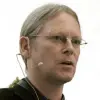
Ruoxi Ran
Principal Accessibility Specialist; AI
Roy Ruoxi Ran (冉若曦) joined the World Wide Web Consortium (W3C) in August 2017 and is currently based in Beijing at W3C's China, Beihang University. He contributes to the Accessible Platform Architectures (APA) Working Group, and his recent work includes exploring AI technologies and their potential standardization. Roy is also responsible for promoting, coordinating, and aligning emerging Web technology standards in China to support global interoperability and harmonization.
Roy holds a Master’s degree in Software Engineering and is concurrently pursuing his Ph.D. at Zhejiang University.

Jean-Guilhem Rouel
Senior Principal DevOps Engineer
Jean-Guilhem joined the W3C Systems Team in August 2006 as the W3C Webmaster at the MIT/CSAIL host site in Cambridge, MA USA.
He graduated in October 2006 from Polytech'Nice-Sophia Computer Science Department (formerly known as ESSI: Ecole Supérieure en Sciences Informatiques) specialized in Networks.
In September 2003 he received a two year degree in Mathematics and Computer Science (DEUG MIAS) at the University Jean-François Champollion in Albi, France.

Maki Sekimoto
Administrative Specialist
Maki joined W3C in Feb 2026 to serve as the administrative assistant for Global Member Relations and W3C Japan. She worked at Bandai Namco for 7 years as a cast of theme park.

Atsushi Shimono
Principal, Team Contact
Atsushi joined the W3C team in November 2018. Currently in the Projects team, and staff for internationalization, Immersive-Web WG, and Timed-Text WG.
Atsushi holds a PhD in Science, with a research area in Astrophysics (observations of Active Galactic Nucleus) from Kyoto University in Japan.

Tzviya Siegman
Director, Sustainability; Director, North America (NA) Member Relations
Tzviya joined W3C in September 2024 as Sustainability Lead and is responsible for North American Member Relations. Prior to joining the Team, Tzviya worked as Standards Principal at Wiley. She became a group participant in 2013 in many of the Publishing groups at W3C, where she led, coordinated, and contributed to several initiatives to develop common standards and best practices.
Tzviya also joined the Positive Work Environment group, which she now chairs, and helped rewrite W3C’s Code of Conduct. Tzviya was elected to the W3C Advisory Board for 3 consecutive terms between 2018 and 2024. She was elected Chair of that group during all of her terms. Tzviya enjoys working on sustainability because it is an essential area for W3C to explore, ensuring that our impact on the physical world is positive and prioritizes the planet and people.
Tzviya received a BA in English Literature from Yeshiva University, speaks Hebrew, and is interested in her kids and pottery and reading in her spare time.

Michael[tm] Smith (sideshowbarker)
Principal, Web Applications
Projects team. Browser-engine hacker. Opera alumnus. Joined the W3C in 2007. Tokyo.

Ralph Swick
Chief Operating Officer
Ralph joined W3C in January 1997, to focus on the Privacy and Demographics project. As that project (now called P3P) was starting, Ralph also started the Metadata project. The Resource Description Framework became a full-time responsibility when the Metadata Activity turned into the Semantic Web Activity. In 2007 Ralph became the leader of the Technology and Society Domain and in 2009 was appointed Acting Chief Operating Officer. As of 2010 the 'acting' qualifier was removed. Then in 2022 Ralph was appointed as Interim Chief Executive Officer of the new W3C, Inc. In November 2023 when W3C's permanent CEO joined, Ralph resumed his role as Chief Operating Officer.
Ralph came to W3C from the X Consortium, where he was Technical Director for the X Window System. Ralph brings to W3C both a systems background and an application background. Long involved with the X Window System, Ralph was one of the architects of the Xt Intrinsics (user interface) toolkit.
Prior to joining the X Consortium, Ralph was a software engineer for Digital Equipment Corporation in their Office Systems Advanced Development Group. There he worked on information filtering tools (software agents) and computer-supported cooperative work tools. Before that, Ralph was in Digital's Corporate Research Group working at MIT Project Athena. Ralph holds a BS in Physics and Mathematics from Carnegie-Mellon University.
Ralph's interests are in applications of Web technologies to support human-human interaction, especially over time and distance.

Ken Troshinsky
Chief Financial Officer
Ken joined the W3C Team in February 2024 as Chief Financial Officer (CFO).
Amy van der Hiel
Manager, Media Relations & Brand Coordinator
Amy van der Hiel joined W3C in 2001. She is the W3C Media Relations Manager & Brand Coordinator and part of the W3C Communications Team. She is also the Team Liaison for the Advisory Board.
For many years Amy worked as the Special Assistant to Tim Berners-Lee, W3C Emeritus Director. Before joining the W3C, Amy worked at the Museum of Fine Arts, Boston and was the Assistant to the Director and Curatorial Associate at the Exhibitions Department of the Massachusetts College of Art. She has her Bachelors in Art History from Bard College, NY and her Masters in Art Education from Mansfield University, PA.

Rigo Wenning
Senior Principal Data Strategist; Senior Principal Standards Advisor
Rigo Wenning joined W3C in 1999 with a focus on privacy and digital signatures. He currently works as member of the legal team, is team contact for the Patents & Standards Interest Group and works on Linked data projects.

Tara Whalen
Principal Privacy Specialist
Tara joined the W3C Team in September 2024 as Privacy Lead to play a key part in the development of technologies that enhance the privacy of the Web and engage with industry and academic leaders on privacy issues and trends, to identify and cultivate new proposals for standardization that improve privacy through stakeholder outreach, and consensus-building.
As part of this role, Tara maintains a community of privacy reviewers to help with privacy reviews of W3C standards. Tara is also the W3C Team Contact of the Privacy Working Group and the Private Advertising Technology Working Group.

Kevin White
Senior Principal Accessibility Specialist
Kevin is the Senior Principal Accessibility Specialist for the Web Accessibility Initiative (WAI) at the World Wide Web Consortium (W3C). In this role Kevin contributes to internationally recognized standards that support accessibility. Kevin provides support and oversight of the accessibility Working Groups, collaborates on WAI strategic planning, and manages W3C accessibility support.

Xiaoqian Wu
Senior Principal Web Applications Specialist; Director, China Member Relations; Site Manager, W3C China
Ms. Wu Xiaoqian (吴小倩) joined W3C in October 2013. Since then, she has been serving as a team contact for a few W3C groups, including the Web Applications WG, the Web Editing WG, the MiniApps WG and the Chinese Web IG.
In September 2018, she became the W3C China Site Manager, responsible for our daily operation in China.
Xiaoqian holds a BA in Software Engineering and an MSc in Animation Design.

Fuqiao Xue
Senior Principal Internationalization Specialist
Since January 2024, Fuqiao Xue is Internationalization Lead, and the contact point for all internationalization related activity at W3C.
Fuqiao joined W3C in July 2017, where he is Strategy Specialist for internationalization. He is staff contact for and contributes technically to the W3C Internationalization Working Group.
Fuqiao has a background in software engineering. He has been involved in free software since 2010, including GNU, Mozilla, and many other free software projects.

Naomi Yoshizawa
Director, Global Member Relations; Director, W3C Japan
Naomi is the Director of Global Member Relations to ensure member satisfaction, encourage participation in W3C groups and events. She is also appointed as the Director of W3C Japan.
Prior to joining W3C, Naomi worked at AT&T Japan as a manager of Marketing Communications for AT&T World Access. She worked on a team that created an innovative prepaid card, produced publications and bids for designs, and developed sales channels. She was awarded a Grand Prize for Best Operations Manager.
She earned an MBA of International Management, from Aoyama Gakuin University, accredited by EFMD.