WCAG-EM Overview:
WCAG Evaluation Methodology
 Video: Conformance Evaluation Overview
Video: Conformance Evaluation OverviewThis video is also available on a W3C server: Video: Conformance Evaluation Overview (file format: MP4, file size: 30MB).
Text Transcript with Description of Visuals
| Audio | Visual |
|---|---|
| Web accessibility conformance evaluation. | Web accessibility conformance evaluation. |
| Conformance evaluation determines how well your content meets specific accessibility standards, such as the "W3C Web Content Accessibility Guidelines", or "WCAG" for short. | Conformance evaluation. A progress bar is filled until meets the WCAG. |
Often you'll want to do conformance evaluation:
|
Icons for each stage: open box with a check mark; round "i"; magnifying glass on a computer; and shopping trolley. |
(continued list)
|
All icons are integrated in a skyrocket icon. A document with the list of accessibility issues. |
To do effective conformance evaluation, you need expertise in:
|
Icons are shown in turn: conformation evaluation words; award ribbon; paint brush and coding icon; assistive technologies icons; and finally people figures. |
| You'll probably also want to use evaluation tools to be more efficient. | A tool box with a gauge moving up. |
| "WCAG-EM", the "Website Accessibility Conformance Evaluation Methodology", provides a structure for your evaluation process. | WCAG-EM, Website Accessibility Conformance Evaluation Methodology. A magnifying glass with the word accessibility. |
It describes a process to:
|
Text boxes load one after the other: define scope; explore assets; select sample; evaluate sample; and report findings. |
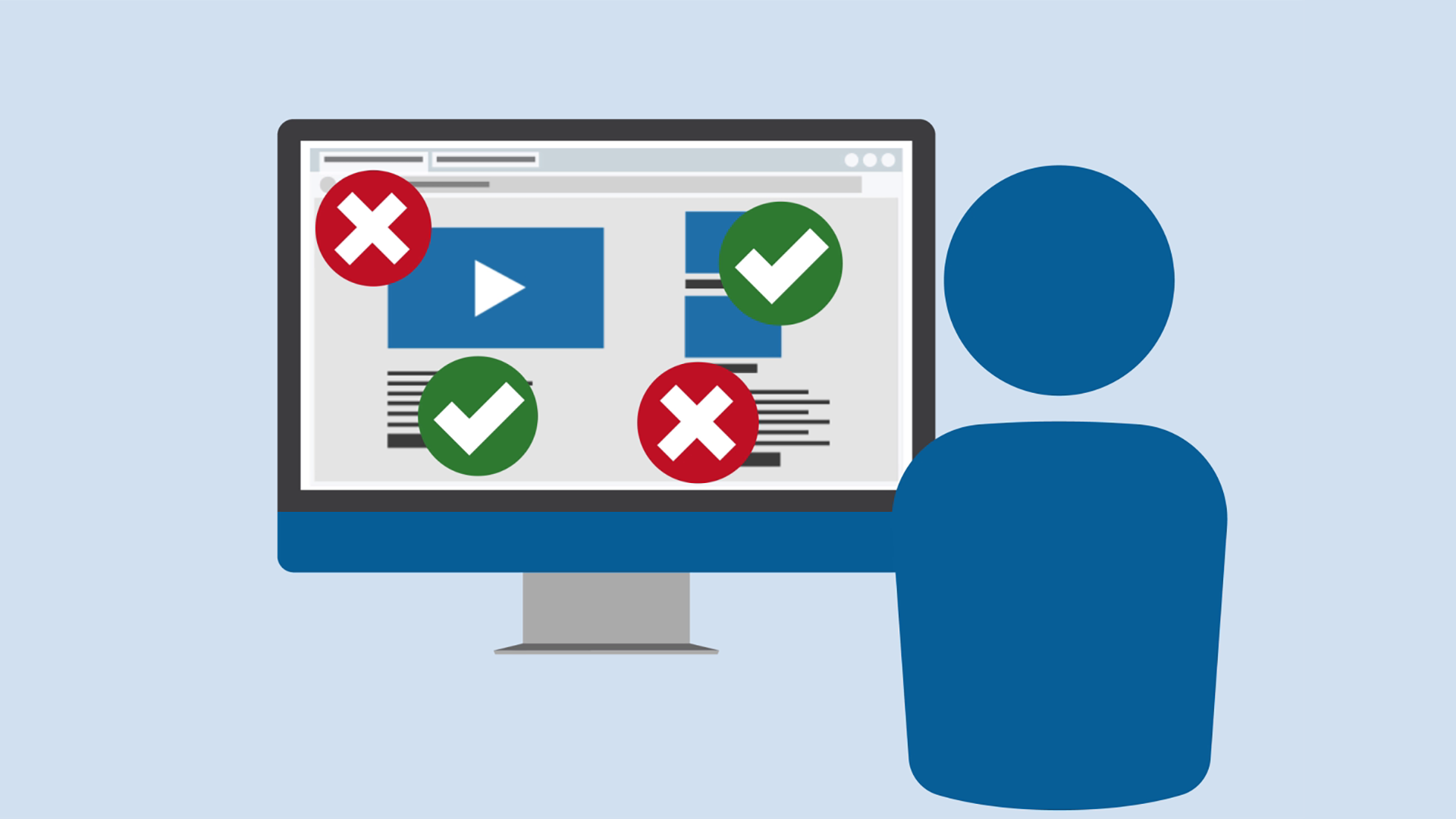
| WCAG-EM also recommends involving real users with disabilities during evaluation, to help you address the real-life experience of your website users. | A person in front of a computer displaying a website. Passes and fails are marked. |
| The open source WCAG-EM Report Tool helps you follow the methodology, record the outcomes, and download a report of your evaluation. | WCAG-EM Report Tool. A progress bar shows the various stages of the evaluation methodology. A record document is displayed in the computer screen and downloaded. |
| Web accessibility: essential for some, useful for all. | Icons around a computer: hand; eye; brain; ear; and mouth with sound waves. |
| For information on web accessibility conformance evaluation, visit w3.o-r-g/W-A-I/evaluation. | Conformance Evaluation, W3C and Web Accessibility Initiative (WAI) logos. |
Introduction
WCAG Evaluation Methodology (WCAG-EM) is an approach for determining how well a digital product conforms to Web Content Accessibility Guidelines (WCAG).
If you want to get a general sense of how a web page or view addresses a few accessibility issues, see Easy Checks - A First Review of Web Accessibility. It is usually best to do preliminary checks before applying WCAG-EM, and to address potential accessibility barriers before investing in a more thorough review such as WCAG-EM.
WCAG-EM is a supporting resource for the WCAG standard; it does not define additional WCAG requirements. It is published as a W3C Group Note.
Scope
WCAG-EM can be applied to all digital products, including websites, mobile applications, and kiosks. It covers different situations, including self-assessment and third-party evaluation. It is independent of particular evaluation tools, web browsers, or assistive technologies.
WCAG-EM is primarily for evaluating conformance of existing digital products. However, accessibility should not be left until the evaluation stage. Accessibility should be integrated from the beginning and throughout the project lifecycle — in planning, design, and development.
Other aspects of evaluation are addressed in related pages of the Evaluating Web Accessibility resource suite. For example, guidance to help you better understand real-world accessibility issues and evaluate effective accessibility solutions is in Involving Users in Evaluating Web Accessibility.
Who WCAG-EM is for
WCAG-EM is for anyone who wants a common procedure for auditing digital products, like websites. It is for direct use by internal evaluators, external auditors, benchmarkers, and researchers. Additionally, WCAG-EM can be referred to by managers, procurers, policy makers, regulators, and others.
Applying WCAG-EM successfully requires knowledge of WCAG, accessible design, assistive technologies, and how people with different disabilities use digital products. This is described in the WCAG-EM Required Expertise section.
What is in WCAG-EM
WCAG-EM provides guidance on using the methodology and considerations for specific situations. The conformance evaluation procedure is detailed under 5 main steps:
- Define the scope of the evaluation - defining what is included in the evaluation; the goal of the evaluation; and the WCAG conformance level (A, AA, AAA).
- Explore the product - identifying key views; key functionality; types of content, designs, functionality, etc.; required technologies.
- Select a representative sample - guidance on structured and randomly selected views when it is not feasible to evaluate every view in a digital product.
- Evaluate the selected sample - determining successes and failures in meeting WCAG; accessibility support for specific features; and recording evaluation steps.
- Report the evaluation findings - aggregating and reporting evaluation findings; making evaluation statements; and calculating overall scores.
Technical document format
WCAG-EM follows the W3C format for technical specifications which includes several sections at the beginning: links to different versions, editors, copyright, abstract, and status with the link to errata and the email address for comments. There is a link at the top to the Table of Contents.
WCAG-EM Report Tool
The WCAG-EM Report Tool: WCAG Evaluation Report Generator helps you follow the steps of WCAG-EM and generate a structured report from the input that you provide.
WCAG-EM 2 and WCAG-EM 1
WCAG Evaluation Methodology (WCAG-EM) 2 was published on 23 July 2026.
What’s different:
- WCAG-EM 1 was specifically for testing websites and web pages.
- WCAG-EM 2 also applies to apps and other digital products.
For more information on the differences, see the WCAG-EM 2 Changelog (GitHub).
The 1.0 version of WCAG-EM is still available.
Who develops WCAG-EM
WCAG-EM 2.0 is developed by the Accessibility Guidelines Working Group (AG WG).
WCAG-EM 1.0 was developed by the WCAG 2.0 Evaluation Methodology Task Force, which was a joint task force of the Web Content Accessibility Guidelines Working Group and Evaluation and Repair Tools Working Group.
The groups are part of the World Wide Web Consortium (W3C) Web Accessibility Initiative (WAI).
Back to Top