What happens when you put developers, standards, and sushi in one room
Author(s) and publish date
- By:
-
-
Elena Lape, Founder & CEO of Holopin (W3C Member), elected to the W3C Advisory Board
-
- Published:
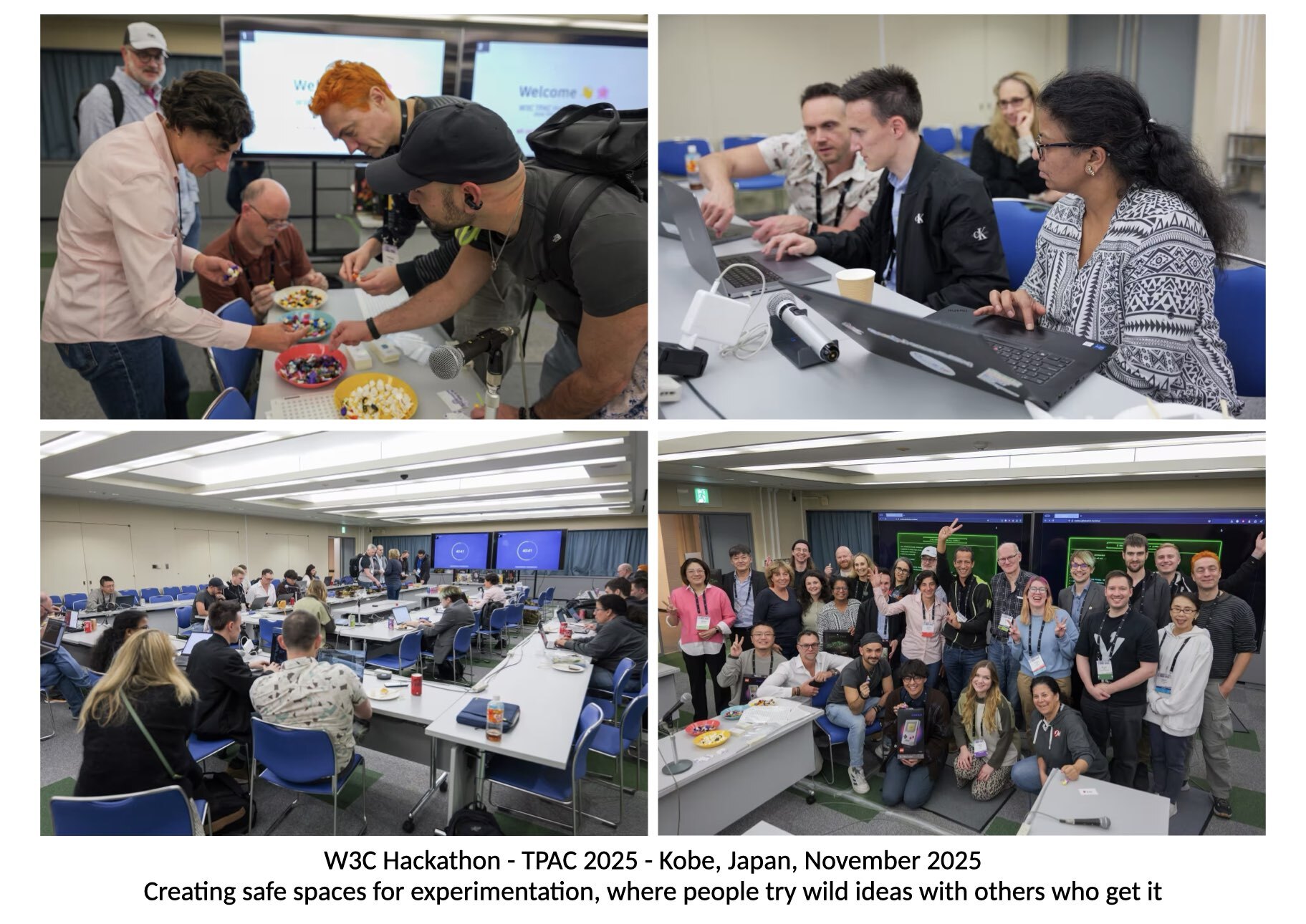
Photos of the TPAC 2025 Hackathon
Last month at TPAC in Kobe, we hosted the W3C Hackathon: TPAC 2025 – Kobe Edition, and once again I was reminded why I love this community so much.
This was our second hackathon in this format, following last year’s event in Anaheim. Same spirit, new city, fresh projects.
We gathered in one of the rooms at the International Conference Center in Kobe, grabbed some sushi, and turned a Tuesday evening into three hours of focused chaos. The event attracted nearly 30 people, ranging from developers to spec editors to W3C staff. For some, it was their first hackathon ever.
Two tiny challenges for big impact
Participants had the opportunity to take on one of two challenges – both intentionally small in scope, so people could actually finish something in 90 minutes. Short for a hackathon? Definitely. But short on purpose: it encouraged quick thinking, tiny scopes, and decisive choices. No time to over-engineer, and just enough time to experiment.
Challenge #1: CSS Playground – Create a wild CSS demo. Anything that showed off the power (and weirdness) of CSS was fair game. HTML and JavaScript were allowed. AI tools were allowed too – as long as people could explain their process.
Challenge #2: Dashboard – Build a small dashboard or visualization. This could be related to W3C, the Web, or anything participants cared about. It could be just a concept or a working prototype – the focus was on insight and storytelling, not feature completeness.
Both tracks were eligible for LEGO prizes and had multiple placements. The constraints were simple: 90 minutes to build or sketch, work solo or in a pair, create everything during the event, and upload it all to a GitHub repo.
17 projects in 90 minutes
By the end of the night, participants had submitted 17 projects. Some were polished. Others were rough prototypes. All of them were genuinely interesting – and available to explore on the event website.
On the CSS side, that included a visual disability simulation applied directly to the hackathon page (which took first place), a “Matrix-style” ASCII video experiment, and playful riffs like Old Web is New Again and single-file CSS slide decks that quietly asked: how far can we really go without JavaScript? (Spoiler: very, very far, as it turns out.)
For the visualization track, people leaned into standards and data: a retro green-on-black Matrix Terminal Dashboard (first place), a Web Engines Liveticker, visualizations of invited experts and working group activity, explainers and Browser Compatibility Data (BCD) comparison tools, an animated a11y helper, an accessibility-first consensus concept, and even a very serious investigation into whether Kobe is the bakery capital of Japan.
All in all, it was a mix of useful, delightful, and “wait, we should actually ship this,” to quote Dom.
Why events like this matter (a lot!)
Hackathons often get framed as “just for fun,” but they quietly solve real problems:
- They lower the barrier to entry for contributing or building something in public — which is critical for web standards.
- They create safe spaces for experimentation, where people can try wild ideas surrounded by others who get it.
- They prototype solutions to very real problems — even if the output is rough, the direction is often spot on.
- And, maybe most importantly, they build relationships that outlast the event itself.
As much as we, standards nerds, sometimes like to think otherwise, the Web doesn’t move forward only because of formal bodies. It moves forward because individuals show up, try things, break things, and share what they learn.
Hackathons give people permission — and a structure — to do exactly that.
A huge thank you!
Huge thanks to everyone who spent their evening hacking with us, to the organizers and guests who kept everything running smoothly, and to the sponsors who kept us fueled.
And to the wider W3C community: thank you for helping standards work stay human.
We’re already thinking about the next edition. Sushi optional, but highly encouraged. ;)
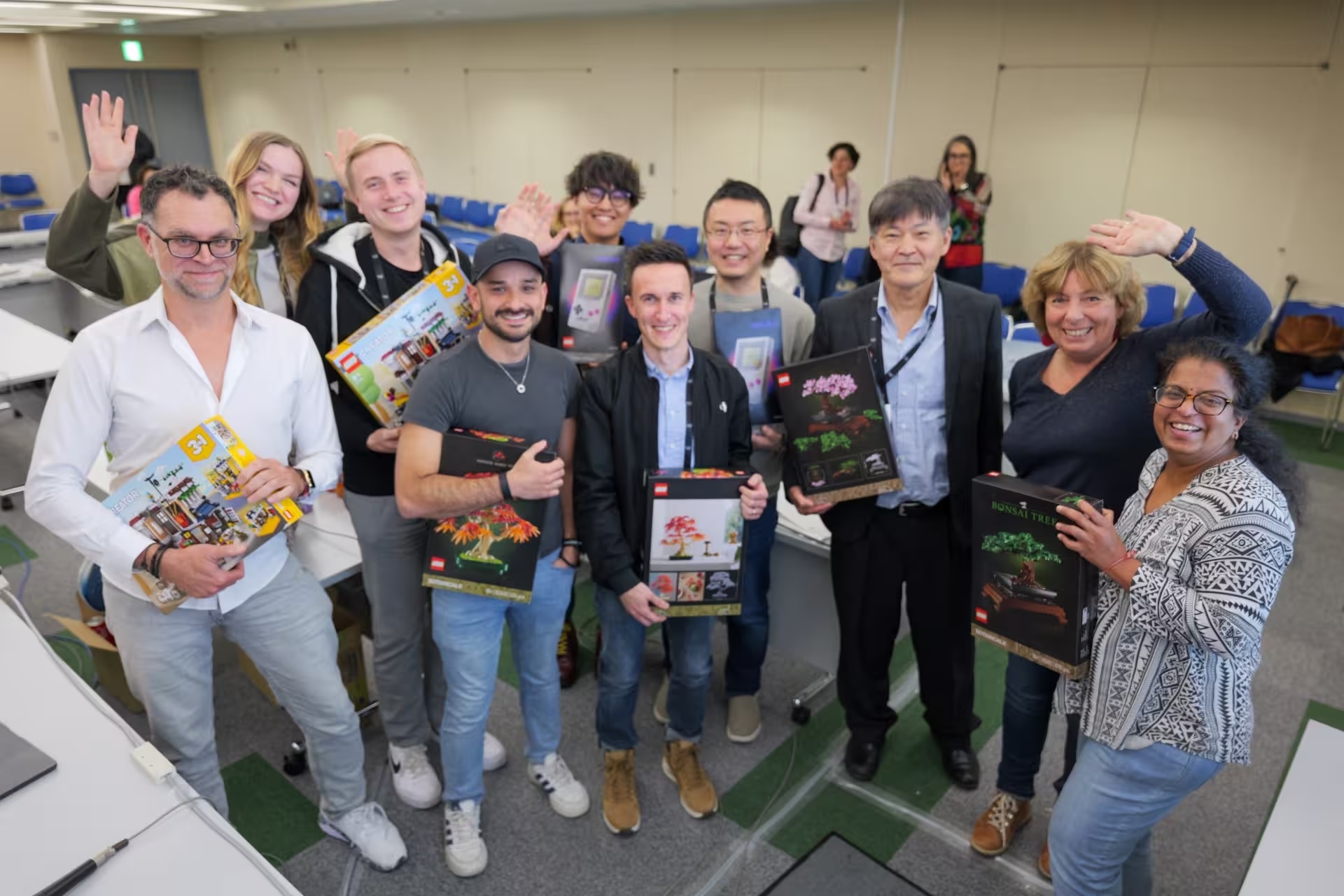
Organizers and winners of the TPAC 2025 Hackathon

Comments (0)
Comments for this post are closed.