This document describes the use of HTTP operations for the purpose of managing a collection of RDF graphs. This interface is an alternative to the SPARQL 1.1 Update protocol. Most of the operations defined here can be performed using that interface, but for some clients or servers, this interface may be easier to implement or work with. This specification may serve as a non-normative suggestion for HTTP operations on RDF graphs which are managed outside of a SPARQL 1.1 graph store.
Status of This Document
This section describes the status of this document at the time of its publication. Other documents may supersede this document.
A list of current W3C publications and the latest revision of this technical report can be found in the W3C technical reports index at http://www.w3.org/TR/.
This is a Last Call Working Draft.
The end date of the Last Call review period is 1 June 2012.
Comments on this document should be sent to public-rdf-dawg-comments@w3.org, a mailing list with a public archive. Questions and comments about SPARQL that are not related to this specification, including extensions and features, can be discussed on the mailing list public-sparql-dev@w3.org, (public archive).
This document was produced by the SPARQL Working Group, which is part
of the W3C Semantic Web Activity.
Change Summary
Removed all references to REST architectural style and replaced with text describing concordance with HTTP (where appropriate). Added general language regarding the use of status codes. Added text about possible future work regarding indirect identification of graphs.
No Endorsement
Publication as a Working Draft does not imply endorsement by the W3C Membership. This is a draft document and may be updated, replaced or obsoleted by other documents at any time. It is inappropriate to cite this document as other than work in progress.
Patents
This document was produced by a group operating under the 5 February 2004 W3C Patent Policy. W3C maintains a public list of any patent disclosures made in connection with the deliverables of the group; that page also includes instructions for disclosing a patent. An individual who has actual knowledge of a patent which the individual believes contains Essential Claim(s) must disclose the information in accordance with section 6 of the W3C Patent Policy.
This document describes an application protocol for the distributed updating and fetching of RDF graph content in a Graph Store via the mechanics of the Hypertext Transfer Protocol (HTTP) [RFC2616]. In doing so, it appeals to the following interface constraints that emphasize the core, architectural components underlying HTTP:
- identification of resources (via Request IRI and the IRI of a graph in a Graph Store)
- manipulation of resources through representations (via the use of an RDF graph representation as input to RDF graph management actions)
- self-describing messages (via the inherent characteristics of RDF as the framework for a Self-Describing Semantic Web)
This specification relies on an intuitive interpretation of the underlying HTTP protocol semantics to determine interaction with a Graph Store. Where the meaning of the operations are described, a SPARQL Update equivalent syntax is shown for clarity.
When this document uses the words MUST, MUST NOT, SHOULD, SHOULD NOT,
MAY and RECOMMENDED, and the words appear as emphasized text, they must be interpreted as described in
RFC 2119 [RFC2119].
The following terminology is used in this document:
- URI - A Uniform Resource Identifier as defined in [RFC3986].
- IRI - An Internationalized Resource Identifier as defined in [RFC3987]. Before an IRI found in a document is used by HTTP, the IRI is first converted to a URI.
-
Resource - Per [RDF-MT], the referents of RDF URI references are called "resources", but no assumptions are made about their nature. For the sake of this protocol, the [RFC2616] definition is used (unless the term "RDF Resource" is used explicitly): a network-accessible data object or service identified by an IRI.
- Resolvable URI - A URI whose resource potentially has one or more representations available via invoking HTTP GET on the URI as defined in [WEBARCH].
- RDF document - A serialization of an RDF Graph into a concrete syntax, typically an RDF/XML or Turtle document.
- Graph Store - A mutable repository of RDF graphs managed by one or more services [SPARQL-UPDATE].
- Graph IRI - An IRI involved in this protocol that is specified as a request URI or embedded as the query component of a request URI and corresponds to the IRI of a graph in the underlying Graph Store.
- RDF graph content - An information resource identified by the graph IRI of a named graph and managed by a server that implements this protocol or
identified by an indirect operation or the default graph. See [WEBARCH] for further discussion on Resources.
- RDF payload - The representation [RFC2616] comprised of an RDF document that is sometimes included with the body of invocations of the operations defined here.
Servers implementing this protocol are HTTP/1.1 servers [RFC2616] and MUST interpret request messages as graph management operations on an underlying Graph Store. The subject of the operation is indicated by the request IRI.
This protocol specifies the semantics of HTTP operations for managing a Graph Store. In particular, it provides operations
for removing, creating, and replacing RDF graph content as well as for adding RDF statements to existing RDF graph content. The interface defined here uses IRIs to direct native HTTP operations to an implementation of this protocol which responds by making appropriate
modifications to the underlying Graph Store. A compliant implementation of this specification MUST accept HTTP
requests directed at its Graph Store and handle them as specified by this protocol with the exception of security considerations such as those discussed in section 7 and others (Denial-of-Service attacks, etc.)
A client using this protocol to manipulate a graph store needs an IRI for each graph. Within the graph store, each graph (except the default graph) is associated with a graph IRI. In some cases ("Direct Graph Identification"), the graph IRIs can be directly used as the request URI of a graph management operation. In other cases ("Indirect Graph Identification"), the Graph Store IRI is used to route the operations onto RDF graph content.
We recall from [SPARQL] that IRIs for RDF graphs in SPARQL queries identify a resource, and the resource can have a
representation that serializes that graph (or, more precisely: by an RDF document of the graph)
Consider the following HTTP request to a server that implements this protocol:
   GET /rdf-graphs/employees HTTP/1.1
   Host: example.com
   Accept: text/turtle; charset=utf-8
Per [RFC2616], the most common usage of a Request-URI is to identify a resource on an origin server or gateway. In our example,
the corresponding request, http://example.com/rdf-graphs/employees is meant to identify RDF triples on the example.com server that describe
employees. In addition, the
request specifies the GET method, which means that a representation of these triples should be returned. In this case,
the preferred representation format is text/turtle
In this way, the server would route operations onto a named graph in a Graph Store via its Graph IRI. However, in using an IRI in this way,
we are not directly identifying an RDF graph but rather the RDF graph content that is represented by an RDF document, which is a serialization of that graph.
Intuitively, the set of interpretations that satisfy [RDF-MT] the RDF graph the RDF document serializes can be thought of as this RDF graph content.
The diagram illustrates this distinction. This diagram illustrates the basic kind of operation where the request URI
identifies the RDF graph content being manipulated over the protocol. Requests to an implementation of this protocol receive HTTP requests using one of the HTTP methods that is directed at some RDF graph content. Above the arrows indicating the request is the relevant HTTP methods and below is any message body content or additional headers that accompany the request. At the head of the arrows leaving RDF graph content is the message body for the corresponding response.
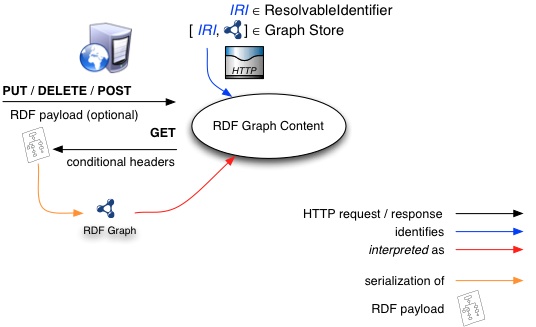
Figure 1: A diagram of the protocol model for direct graph references.
Despite the convenience of using the request URI to identify RDF graph content for manipulation, it is often the case that:
- the naming authority associated with the IRI of an RDF graph in a Graph Store is not the same as the server managing the identified RDF content
- the naming authority is not available
- the IRI is not dereferenceable (i.e., when dereferenced, it does not produce a RDF graph representation)
As discussed in [RFC3986], query components are often used to carry identifying information in the form of key / value pairs where the value is another IRI. This protocol leverages this convention and
provides a specific interface whereby a graph IRI can be embedded within the query component of the request IRI:
   GET /rdf-graph-store?graph=http%3A//www.example.com/other/graph HTTP/1.1
   Host: example.com
   Accept: text/turtle; charset=utf-8
In the example above, the encoded graph IRI (http://www.example.com/other/graph) is percent-encoded [RFC3986] and indirectly
identifies RDF triples to manipulate. Any server that implements this protocol and receives a request IRI
in this form MUST perform the indicated operation on the RDF graph content identified by the IRI embedded in the query component where the IRI is the
result of percent-decoding the value associated with the graph key. The query string IRI MUST be an absolute IRI and the server MUST
respond with a 400 Bad Request if it is not. The diagram below illustrates this.
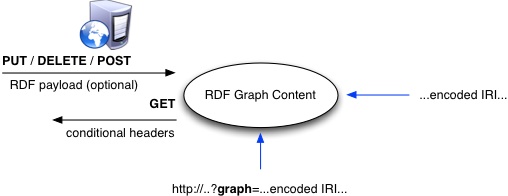
Figure 2: A diagram of the protocol model for indirect graph references (uses the same legend as the previous diagramT).
As indicated in section 3.3 of [RFC3986], the path component (of an IRI) contains data, usually organized in hierarchical form, that, along with data in the
non-hierarchical query component, serves to identify a resource within the scope of the IRI's scheme and naming authority. As a result, the full request
IRI identifies the same RDF graph content as does the IRI embedded in the query component.
A future Working Group may provide additional interfaces for indirectly identifying RDF graph content as well as mechanisms for their discovery.
In a similar manner, a query component comprised of the string default can be used to indicate that the operation indirectly identifies
the default graph in the Graph Store. In this way, the example above can be modified to a request for an RDF/XML document that serializes
the default graph in the Graph Store:
   GET /rdf-graph-store?default HTTP/1.1
   Host: example.com
   Accept: text/turtle; charset=utf-8
In a request such as:
   GET /rdf-graph-store?graph=http%3A//www.example.com/other/graph HTTP/1.1
   Host: example.com
   Accept: text/turtle; charset=utf-8
http://www.example.com/rdf-graph-store identifies the Graph Store managed by the HTTP service. In order to dispatch requests
to manage named or default graphs by embedding them in the query component of the Graph Store URL, the URL will need to be known a priori.
This section describes the use of the HTTP verbs to determine the operations performed on RDF graph content. In places where an equivalent SPARQL Update operation is given,
<graph_uri> is understood to be either the request IRI or the IRI indirectly specified via the query component as described above. Similarly, in the case of
an operation that manages the default graph, the SPARQL Update operation will not include any mention of a graph.
If the Accept header is not provided with a GET request, the server MUST return one of RDF XML, Turtle, or N-Triples. For operations involving an RDF payload (PUT and POST), the server MUST parse the RDF payload according to media type specified in the Content-Type header if it is provided in the request. If the header is not provided, the implementation has a routine that can guess the type by the content of the resource or via the extension of the file it was loaded from, and such a routine reported that the resource was clearly some other document format and not RDF/XML, then the implementation MAY attempt to parse the document using this format. Otherwise, if this header is not provided, the server SHOULD attempt to parse the RDF payload as RDF/XML.
This protocol also supports the proper handling of operations involving "multipart/form-data" [html4]. In particular,
section 17.13.4 Form content types discusses how content indicated
with the multipart/form-data content type are messages containing a series of parts. This protocol supports the submission of multiple
RDF documents in operations involving some indicated RDF graph content via this mechanism, where each document is uploaded using the standard web form file upload widget. The specifics of this mechanism is discussed in section 5.5 (HTTP POST).
Developers of implementations of this protocol should refer to [RFC2616] for additional details of appropriate behavior beyond those specified here. Section
5 only serves to define the behavior specific to the manipulation of RDF graph content. For example, conditional requests that make use of headers such as
If-Modified-Since that are intended to reduce unnecessary network usage should be handled appropriately by implementations of this protocol per [RFC2616].
Implementations MUST use the response status codes defined in HTTP [RFC2616] to indicate the success or failure of an operation. Developers should consult the HTTP specification for detailed definitions of each status code. For example, in response to operations involving an RDF payload, if
the attempt to parse the RDF payload according to the provided Content-Type fails then the server MUST respond with a 400 Bad Request.
A request using an unsupported HTTP verb in
conjunction with a malformed or unsupported request syntax MUST receive a response with a 405 Method Not Allowed. If the RDF graph content identified in the request does not exist in the server,
and the operation requires that it does, a 404 Not Found response code MUST be provided in the response.
If a clients issues a POST or PUT with a content type that is not understood by the graph store, the implementation MUST respond with 415 Unsupported Media Type. The use of 401 and 403 is covered later in the section regarding security.
A request that uses the HTTP GET method MUST retrieve an RDF payload that is a serialization of the named graph paired with the graph IRI in the Graph Store. Developers of implementations of this protocol should refer to [RFC2616] (section 13) for details on recommended cache-control headers and usage.
The following two operations are considered to be equivalent
    GET /rdf-graph-store?graph=..graph_uri.. HTTP/1.1
    Host: example.com
    Accept: text/turtle; charset=utf-8
CONSTRUCT { ?s ?p ?o } WHERE { GRAPH <graph_uri> { ?s ?p ?o } }
Where the request involves the default query component, the following two operations are equivalent
    GET /rdf-graph-store?default HTTP/1.1
    Host: example.com
    Accept: text/turtle; charset=utf-8
CONSTRUCT { ?s ?p ?o } WHERE { ?s ?p ?o }
The response to such request SHOULD be made cacheable wherever possible and in any of the preferred representation formats specified in the Accept request-header field. In the event that the specified representation format is not supported,
a 406 Not Acceptable response code SHOULD be returned.
Historically, there has been some ambiguity regarding the nature of what
is returned from dereferencing an IRI. When an HTTP GET is invoked with a request IRI, what is returned and what is its relation to the resource
identified by the request IRI? In resolving this ambiguity, the W3C Technical Architecture Group specified a simple rule
that determines the nature of the resource based on the response code returned. In this protocol, HTTP GET requests
are used to retrieve a representation of the RDF graph content identified (directly or indirectly) by the request IRI. Graph IRIs identify
RDF graph content (an information resource) and so such a request should receive a response with a 200 (Ok) which is consistent
with these rules, the first of which states:
If an "http" resource responds to a GET request with a 2xx response, then the resource identified by that IRI is an information resource.
Information resources are resources with essential characteristics that can all be conveyed in a message [WEBARCH]. In this case,
the characteristics of RDF graph content can be conveyed as RDF payload which serializes the named graph paired with the
graph IRI in the underlying Graph Store. This protocol provides a means
for requesting the representation without the need for indirection at the protocol level even if
the naming authority associated with the IRI of the named RDF graph in the Graph Store is not the same as the
server managing the identified RDF graph content.
A request that uses the HTTP PUT method MUST store the enclosed RDF payload as RDF graph content. In the examples below, the initial HTTP
request MUST be understood to have the same effect as the sequence of SPARQL Update operations that follow
    PUT /rdf-graph-store?graph=..graph_uri.. HTTP/1.1
    Host: example.com
    Content-Type: text/turtle

    ... RDF payload ...
    DROP SILENT GRAPH <graph_uri>;
    INSERT DATA { GRAPH <graph_uri> { .. RDF payload .. } }
In the case where the default graph is targeted (via default query component) for management, the following operations are equivalent
    PUT /rdf-graph-store?default HTTP/1.1
    Host: example.com
    Content-Type: text/turtle

    ... RDF payload ...
    DROP SILENT DEFAULT;
    INSERT DATA { .. RDF payload .. }
Either the request or the encoded IRI (embedded in the query component) identifies the RDF payload enclosed with the request as RDF graph content.
The server MUST NOT attempt to apply the request to some other resource. If the identified RDF graph content already exists, the enclosed entity MUST be considered
as a modified version of the one residing on the origin server. If the identified RDF graph content does not exist and that IRI is capable of being defined as new RDF graph content by the requesting user
agent, the origin server MUST create the RDF graph content with that IRI in the underlying Graph Store. DROP is needed to remove any previous
RDF graph content. Developers should refer to [SPARQL-UPDATE] for the specifics of how to handle empty graphs. For implementations that support empty graphs, if the request body is empty and there is sufficient authorization to create a new named graph using the IRI used in the request IRI, then an empty graph would need to be created. Note, this option is only relevant for situations where an empty body is appropriate for the indicated content-type. Otherwise, as described in section 5.1, a 400 Bad Request SHOULD be returned.
If new RDF graph content is created, the origin server MUST inform the user agent via the 201 Created response. If existing RDF graph content
is modified, either the 200 OK or 204 No Content response codes MUST be sent to indicate successful completion of the request.
If the resource could not be created or modified with the request IRI (perhaps due to security considerations), an appropriate error response SHOULD be given that reflects
the nature of the problem.
A request that uses the HTTP DELETE method SHOULD delete the RDF graph content identified by either the request or encoded IRI. This method MAY be overridden
by human intervention (or other means) on the origin server. If there is no such RDF graph content in the Graph Store, the server MUST respond with a
404 Not Found response code. An example of when the method may be overridden is in a content management system with optimistic concurrency controls.
    DELETE /rdf-graph-store?graph=..graph_uri.. HTTP/1.1
    Host: example.com
Is equivalent to:
DROP GRAPH <graph_uri>
in the case where a named graph is targeted for management. Otherwise, the following
    DELETE /rdf-graph-store?default HTTP/1.1
    Host: example.com
is equivalent to
DROP DEFAULT
A response code of 200 OK or 204 No Content MUST be given in the response if the operation succeeded or 202 (Accepted) if the action has not
yet been enacted. However, the server SHOULD NOT indicate success unless, at the time the response is given, it intends to delete
the RDF graph content or move it to an inaccessible location. In the event the operation is overridden, a response code of 403 Forbidden
should be returned.
A request that uses the HTTP POST method and a request IRI that identifies RDF graph content MUST be understood as a request that the origin server perform an RDF merge of the enclosed
RDF payload enclosed into the RDF graph content identified by the request or encoded IRI. The following two operations are considered to have the same effect
    POST /rdf-graph-store?graph=..graph_uri.. HTTP/1.1
    Host: example.com
    Content-Type: text/turtle

    ... RDF payload ...
INSERT DATA { GRAPH <graph_uri> { .. RDF payload .. } }
In the case where a default graph is targeted for management, the following are equivalent
    POST /rdf-graph-store?default HTTP/1.1
    Host: example.com
    Content-Type: text/turtle

    ... RDF payload ...
INSERT DATA { .. RDF payload .. }
As mentioned earlier, "multipart/form-data" can be dispatched to implementations of this protocol. When used with POST this operation MUST be understood as a request that the origin server perform an RDF merge of the graphs - that the documents submitted with the multipart form are a serialization of - into the RDF graph content identified by the request or encoded IRI. In such a case, if the Content-Type is not provided, implementations MAY attempt to determine it from the file's extension rather than respond with 400 Bad Request.
If the request IRI identifies the underlying Graph Store,
the origin server MUST create a new RDF graph comprised of the statements in the RDF payload and return a designated graph IRI associated with the new graph.
The new graph IRI should be specified in the Location HTTP header along with a 201 Created code and be different from the request IRI.
This scenario is useful for situations where the requesting agent either does not want to specify the graph IRI of a new graph to create
(via the PUT method) or does not have the appropriate authorization to do so. If the graph IRI does not identify either a Graph Store or RDF graph content, the origin server should respond with a 404 Not Found.
In either case, if the request body is empty, the implementation SHOULD respond with 204 No Content.
This protocol is a companion to the use of both SPARQL Update and SPARQL Query over the SPARQL protocol via HTTP POST. Both protocols specify different operations performed via the HTTP POST method.
When used in this protocol, the HTTP HEAD method is identical to GET except that the server MUST NOT return a message-body in the response. It is meant to be used for
testing dereferenceable IRIs for validity, accessibility, and recent modification.
The response to such a request from a server that manages a Graph Store
MAY be cacheable. If the new field values indicate that the cached RDF graph content differs from the current entity (as would be indicated by a change in Content-Length, Content-MD5, ETag or Last-Modified), then the cache MUST treat the cache entry as stale. As mentioned in the beginning of the previous section, developers should refer to [RFC2616] for the specifics of this.
The IETF specified Patch Method for HTTP can be used to request that a set of changes described
in the request entity be applied to the named graph associated with the graph IRI of the RDF graph content resource identified by the request IRI.
SPARQL 1.1 Update can be used as a patch document. In particular, SPARQL 1.1 Update requests that manage
the graph associated with the RDF graph content identified (directly or indirectly) in the request can be used
as the RDF payload of a HTTP PATCH request to modify it. If a SPARQL 1.1 Update request is used as the RDF payload for a PATCH request that
makes changes to more than one graph or the graph it modifies is not the one indicated, it would be prudent for the server
to respond with a 422 Unprocessable Entity status.
Intuitively, the difference between the PUT and PATCH requests is reflected in the
way the server processes the enclosed entity to modify the RDF graph content
given by the request IRI. In a PUT request, the enclosed entity
is considered to be a modified version of the RDF graph content stored on the
origin server, and the client is requesting that the stored version
be replaced. With PATCH, however, the enclosed entity contains a set
of instructions describing how the RDF graph content residing on the
origin server should be modified to produce a new version.
As with any protocol that is implemented as a layer above HTTP, implementations SHOULD take advantage of the many security-related facilities associated with it and are not required to carry out requested graph management operations that may be in contradistinction to a particular security policy in place. For example, when faced with an unauthenticated request to replace system critical RDF statements in a graph through the PUT method, applications may consider responding with the
401 status code (Unauthorized), indicating that the appropriate authorization is required. In cases where authentication is provided fails to meet the requirements of a particular access control policy, the
403 status code (Forbidden) can be sent back to the client to indicate this failure to meet the access control policy.
7.1
Normative References
- RFC2119
-
RFC 2119: Key words for use in RFCs to Indicate Requirement Levels,
Scott Bradner, 1997. (See http://www.ietf.org/rfc/rfc2119.txt)
- HTML 4.01
-
HTML 4.01 Specification,
D. Raggett, A. Le Hors, and I. Jacobs, 1999. (See http://www.w3.org/TR/html4/)
- RFC3986
- Uniform Resource Identifier (URI): Generic Syntax, Berners-Lee, Fielding, Masinter, January 2005.
- RFC2616
- Hypertext Transfer Protocol - HTTP/1.1. J. Gettys, J. Mogul, H. Frystyk, L. Masinter, P. Leach, T. Berners-Lee,
June 1999. Available at http://www.ietf.org/rfc/rfc2616.txt.
-
WEBARCH
-
Architecture of the World Wide Web, Volume One
, N. Walsh, I. Jacobs, Editors, W3C Recommendation, 15 December 2004, http://www.w3.org/TR/2004/REC-webarch-20041215/ . Latest version available at http://www.w3.org/TR/webarch/ .
- RFC3987
- Internationalized Resource Identifiers (IRIs), Duerst, Suignard, January 2005.
-
SPARQL-UPDATE
- @@ref-update
7.2
Informative References
-
RDF-MT
-
RDF Semantics
, P. Hayes, Editor, W3C Recommendation, 10 February 2004, http://www.w3.org/TR/2004/REC-rdf-mt-20040210/ . Latest version available at http://www.w3.org/TR/rdf-mt/ .
-
SPARQL
- @@ref-query
Acknowledgements
The editor would like to thank the following individuals for their input into the creation of this document:
Sandro Hawke, Birte Glimm, Andy Seaborne, Steve Harris, Arnaud Le Hors, Ivan Mikhailov, David Booth, Simon Johnston, Kjetil Kjernsmo, Gregg Reynolds, Leigh Dodds, Tim Berners-Lee, and Ian Davis
Change Log
Changes since Proposed Recommendation
Changes since Candidate Recommendation
Changes since Last Call
- Removed reference to REST